Entering a casino for the initial time, regardless of a land-based location or a virtual platform, can feel like walking into a foreign country where everyone communicates in a fluent language of chips, cards, and rotating reels https://coolcatscasino.org/. I recollect that precise feeling of being swamped by the pure cacophony and tempo of it all. The goal here is not to present you a vision of quick fortunes, but to act as a patient interpreter. I intend to dismantle the complication of classic casino games, stripping them down to their basic rules and the statistical realities that govern them, so you can traverse the experience with insight rather than disorientation.
The Solid Foundation of Table Games and Their Real-Time Evolution
Table games are the green-felted backbone of any gambling establishment, where strategy meets chance and the house edge is generally at its most clear. Unlike the individual nature of slots, these games carry a social aspect, even in digital live-dealer formats. You are not just playing against an algorithm; you are engaging with fixed mathematical probabilities and, often, a human dealer. Understanding this category is the first step toward becoming a knowledgeable gambler rather than a button-pressing casual player.
Every indicator on bleacherreport.com a table serves a purpose beyond decoration. The numbered pockets on a roulette wheel or the specific boxes on a blackjack felt define payout odds and the house margin. Beginners often ignore these printed rules, assuming they are mere decoration. That is a misstep. The text on the felt tells you if blackjack pays 3 to 2 or a far less beneficial 6 to 5. It states the minimum and maximum stakes. Learning to read the table instantly improves your protection, preventing you from accidentally sitting down at a game with rules designed to drain your bankroll at a quicker pace.
The casino advantage is the key concept in this guide. It is not a fee you pay, but the statistical edge the casino possesses. If a game has a 2% house edge, the casino calculates to keep $2 for every hundred wagered over an infinite timeline. This is not to say you cannot win in the short run. Variance, the technical term for fortune, allows wild swings. But the casino advantage secures the casino continues operating. Every choice you make should be considered through the perspective of reducing this edge.
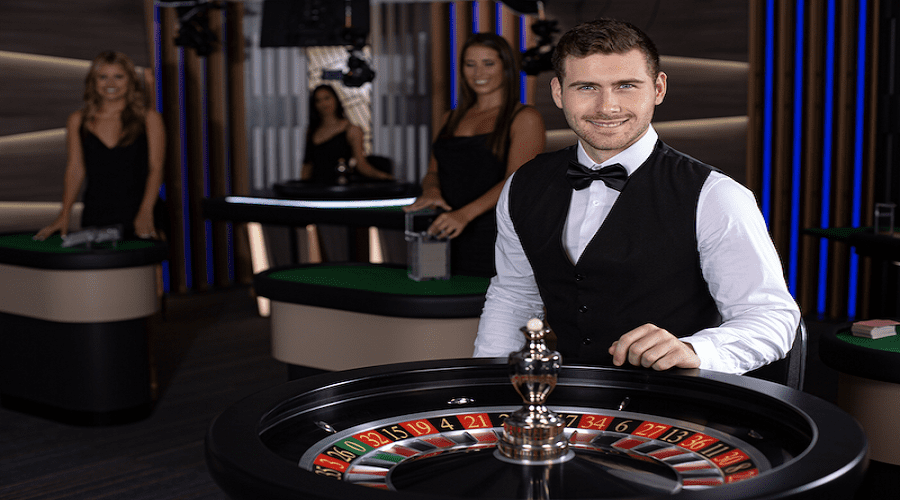
Live dealer games close the divide between the solitary digital experience and the real social atmosphere of a brick-and-mortar casino. A actual live dealer in a studio manages real cards or a physical wheel, and the gameplay is streamed to your device in high definition. I find this format solves a basic trust concern some players feel about Random Number Generators. Observing a real card pulled from a shoe provides a emotional ease that a virtual representation cannot match, even if the numerical outcome is equivalent.
The interface overlay makes the experience usable. You view the video stream of the dealer, but you also see a digital betting layout where you press to place chips. A chat box enables you to communicate with the dealer and sometimes other players, recreating the social banter absent in bfmtv.com standard online table games. Live dealers operate on a schedule and deal at a slower pace than a solo digital game. This slower pace naturally limits your hands per hour, which is a built-in responsible gaming tool, slowing the speed at which the house edge wears against your bankroll.
However, live dealer games typically have higher minimum bets than their purely digital counterparts. Running a studio with human staff is expensive, and those costs are transferred to the player. You will rarely find a live blackjack table for a one-dollar minimum bet. Furthermore, the game rules in a live studio are fixed; you cannot simply move to a variant with a better pay table as you can with video poker. The experience prioritizes immersion and trust over the razor-thin margins and ultra-low stakes present in the standard digital lobby.
Roulette game and the Poetry of the Wheel
Roulette strips gambling down to its simplest, most graphic form. There is no choice once the ball is in motion; it is a game of randomness where you are wagering on where a small ivory ball will land on a rotating, numbered wheel. I find its grace lies in the broad variety of risk you can choose. You can bet on a one number for a high payout or cover almost the entire board for a almost certain, albeit tiny, profit. The wheel is a concrete example of probability, and understanding the layout is the key to mastering it.
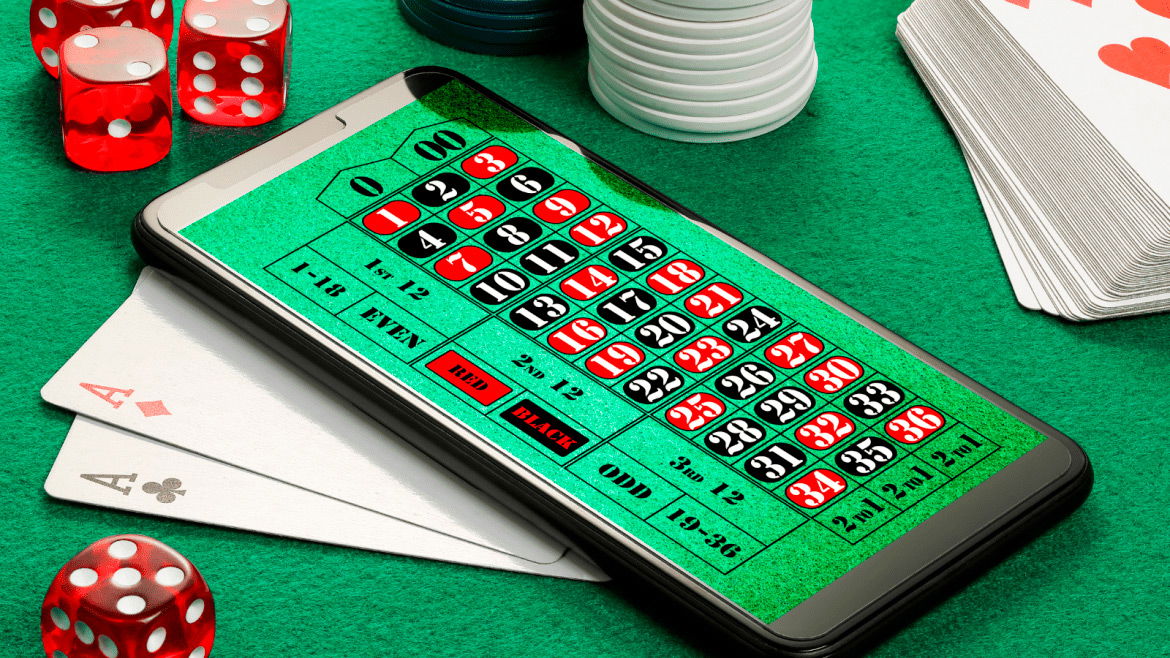
The crucial distinction newcomers must learn immediately is the difference between European and American roulette. The European wheel has thirty-seven pockets, numbered zero through thirty-six. The American wheel adds a double-zero pocket, raising the total to thirty-eight. This might seem like a minor addition, but it almost doubles the house edge. On a single-number bet, the European house edge is a moderate two point seven percent. On an American wheel, it jumps to a severe five point two six percent. I will invariably, without hesitation, direct a new player toward the single-zero wheel. It is the same game with dramatically better survival odds.
Playing on the outside of the layout gives the safest harbor for a beginner. These are the red or black, odd or even, and high or low wagers. They return even money, meaning you multiply by two your bet if you win. While the payout is less thrilling than a straight-up hit, these bets cover a significant section of the wheel, providing you a pattern of small wins and losses that lengthens your playing session. I consider them as a way to gain time, to understand the flow of the croupier and the speed of the wheel without the drastic financial swings that come from pursuing single numbers.
Slot Machines and the Virtual Reels
Slot machines have seen a dramatic transformation from classic lever machines to complex digital entertainment hubs, yet the fundamental idea remains unchanged. You are betting on a random number generator to line up symbols on a payline. I believe that the modern video slot, with its falling reels, multi-level bonus games, and licensed themes, often masks the simple math underneath. A slot is not a game of skill; it is a lottery draw that happens in an instant, and the primary variable you control is the volatility you choose to experience.
Return to Player, or RTP, is the term you must keep in mind. It is the theoretical percentage of all wagered money a slot machine will pay back over millions of spins. A game with a ninety-six percent RTP in theory returns ninety-six dollars for every hundred wagered. The remaining four percent is the house edge. I always recommend checking the game’s information screen for this figure. A difference of just one or two percent in RTP has a huge impact on your session’s longevity. High RTP slots are not necessarily more generous in the short term, but they give you more breathing room against variance.
Volatility, or variance, governs the rhythm of your play. Low-volatility slots pay out common but small wins, often keeping your balance steady. High-volatility slots are the opposite; they can deplete your credits for long stretches, only to explode with a massive win that makes up for the drought. I see beginners make the mistake of playing high-volatility games with a small bankroll, only to be wiped out before the bonus round triggers. Matching your bankroll to the game’s volatility is crucial. If you have twenty dollars, a low-volatility game lets you play for an hour. A high-volatility game might last five minutes.
The game of 21 and the Pursuit of Twenty-One
Blackjack is the fairest game on the gaming floor since it places you straight against the dealer with no opponents influencing your hand. Your aim is deceptively simple: create a hand count closer to twenty-one than the dealer without going over it. Number cards have their face value, face cards are valued at ten, and an ace changes between one and eleven. I consider this versatility of the ace as the essence of the game; it gives the softness that permits for assertive strategy without instant busting.
The dealer’s rigid constraints are your chief weapon. The dealer has no free will. They are required to draw cards until they attain a hard total of at least seventeen, and they have to stand when they reach that point. Some tables require the dealer to hit on a soft seventeen. This rule change is crucial because it increases the house edge. I constantly suggest seeking tables where the dealer stands on all seventeens. It signals a player-oriented environment. Your strategy, thus, centers entirely around leveraging the dealer’s predictable behavior while handling your own risk of busting.
I am unable to discuss blackjack without covering basic strategy, which is not card counting but a strictly protective mathematical chart. It dictates the mathematically best move for every conceivable player hand against every conceivable dealer up-card. Ought you hit a sixteen against a dealer’s ten? Basic strategy says yes, in spite of the fear of busting, because the math demonstrates you lose less money in the long run by hitting than by standing and expecting the dealer busts. Learning this chart reduces the house edge to less than half a percent, making blackjack the most balanced game in the house for the prepared mind.
Baccarat and the Grace of the Binary Choice
Baccarat suffers from an unwarranted standing as an intimidating, high-roller-only affair. In reality, it is without doubt the most straightforward card game in the casino, needing zero skill or choices after you place your bet. You are simply betting on which one of two hands, the Player or the Banker, will reach a total closest to nine. I value its starkness; it is a simple coin flip with a very low house edge, hidden by complex drawing regulations that you, as the participant, never need to learn because the croupier carries out them automatically.
The drawing rules are set and non-negotiable. If either outcome reaches an eight or nine from the opening two cards, it is a natural and no more cards are pulled. If not, a detailed tableau governs whether the Player hand takes a third card, and then whether the Banker hand draws. The appeal is that this complexity is completely the dealer’s problem. Your only role is to select a option. I often see novices worry over the third-card procedures, thinking they have to understand them to come out ahead. You do not. The system runs like clockwork, like a clock, irrespective of your knowledge.
The most useful tip I can provide for baccarat is to steer clear of the Tie bet altogether. It is a bad bet, without question. While the Player bet comes with a house edge of about one point two four % and the Banker bet a very small one point zero six percent, the Tie bet skyrockets to over fourteen percent in most variations. The return of eight-to-one is a dangerous attraction. I view choosing the Banker and covering the standard five percent charge on wins as the statistically sound strategy. It is monotonous, it is samey, but it is the closest you will find to a even contest against the house.
Video poker and the Skill Element
Video poker occupies a distinct liminal space between slots and table games. It appears as a slot machine, but it operates as a draw poker game where your decisions directly change the outcome. You receive five cards, you decide which to hold and which to discard, and the replacement cards determine your final hand. I regard it as the thinking person’s machine game because the house edge can be nearly removed, or even shifted in the player’s favor, if you play perfectly on the right pay table. It is the single machine-based game where the screen tells you the exact odds of your game.
The pay table is the contract you are signing. It reveals exactly how many coins you win for each hand, from a pair of Jacks up to a Royal Flush. The most popular variant, Jacks or Better, needs a 9/6 pay table to be considered full-pay. This means a full house pays nine coins and a flush pays six for a single coin bet. A ostensibly slight reduction, like an 8/5 pay table, dramatically increases the house edge. You must learn to scan the pay table before inserting money. It is the sole honest signal the machine provides about its mathematical tightness.
Playing video poker accurately demands a strategy chart, and unlike blackjack, you can lawfully use one while you play online. The decisions are not always intuitive. For instance, holding a low pair over a four-card flush is often the mathematically sound move, even though the flush looks prettier. I see video poker as a discipline. It rewards patience and penalizes hunches. The return is directly proportional to the accuracy of your draw decisions. If you are prepared to learn a relatively simple set of rules, you can play a game where the house advantage is often below zero point five percent, a rarity in any casino.
Správa bankrollu and the Practice of Trvalý úspěch
I have reserved the most important lesson for last because it underpins every single game discussed above. Without bankroll management, mastery of strategy is useless. Your bankroll is not just the money you are ready to win; it is the money you have clearly set aside as the cost of your entertainment. I see it as a ticket price. You do not walk into a theme park and feel crushed that you spent money on admission. A casino visit, whether online or physical, should carry the same mental detachment. The funds are spent the moment you deposit them; any withdrawal is a bonus.
The methods of managing a bankroll are simple but require strict discipline. I advocate for a session limit, a stop-loss point where you walk away irrespective of how entitled you feel a win is. The concept of being due is the gambler’s fallacy, the false belief that past independent events affect future ones. A roulette wheel that has landed on black ten times in a row is not due for red. The odds reset to exactly the same probability on the eleventh spin. Setting a firm loss limit safeguards you from chasing this illusion and digging a financial hole that entertainment cannot excuse.
Just as crucial is the win goal. It seems counterintuitive to stop when you are winning, but the math of the house edge dictates that the longer you play, the closer your results will trend toward the expected loss. A short session that yields a moderate profit is a mathematical victory. I advise dividing your session bankroll into smaller units to avoid betting too large a percentage on a single hand or spin. A good rule of thumb for table games is to have at least twenty to thirty units of your average bet size. This cushion allows you to weather the natural variance without being wiped out by a short, predictable losing streak.
Here are the non-negotiable rules I stick to to keep the entertainment sustainable:
- Establish a hard loss limit before you start and never exceed it, no matter how tempting a comeback appears.
- Define a win goal and walk away once you reach it; the longer you play, the more the house edge works against you.
- Split your session bankroll into at least twenty betting units so a single cold streak does not end your play prematurely.
- Never chase losses by increasing bet sizes; that turns a controlled expense into an emotional spiral.
- View every deposit as a sunk entertainment cost, not an investment expecting a return.
The true skill in classic casino gaming is certainly not predicting outcomes, but managing your own behavior. The games are built with mathematical precision, and they will operate exactly as programmed regardless of your mood, your system, or your lucky charm. By understanding the rules, looking for the best pay tables, and treating your bankroll as a finite entertainment expense, you shift from being a passive participant to an informed consumer. The goal is certainly not to guarantee a win, which is impossible, but to guarantee that you receive exactly the experience you paid for, no more and no less, and to depart the table with your dignity and financial health intact.